When I wrote about my experience as a camp counselor in my post, the best remote jobs for people with social anxiety, something occurred to me that I hadn’t fully addressed before.
For someone actively trying to manage their anxiety, walking into the wrong type of work environment can make everything else in your life so much harder. Your recovery, your confidence, your ability to build the kind of self-trust that actually changes things long term.
That’s what this post is going to change. We are going to discuss the worst types of jobs you could be doing as someone with social anxiety. If you’re considering one of these careers, that’s completely okay. But going in with a clear understanding of what you’re taking on is far better than being blindsided by it.
If you want to explore the other side — roles that actually suit someone with social anxiety — my guides on the best jobs for people with social anxiety and the best remote jobs cover both in depth.
Why Some Jobs Intensify Social Anxiety
To understand why certain jobs are harder for someone with social anxiety, it helps to understand what social anxiety actually does to you while you’re trying to work.
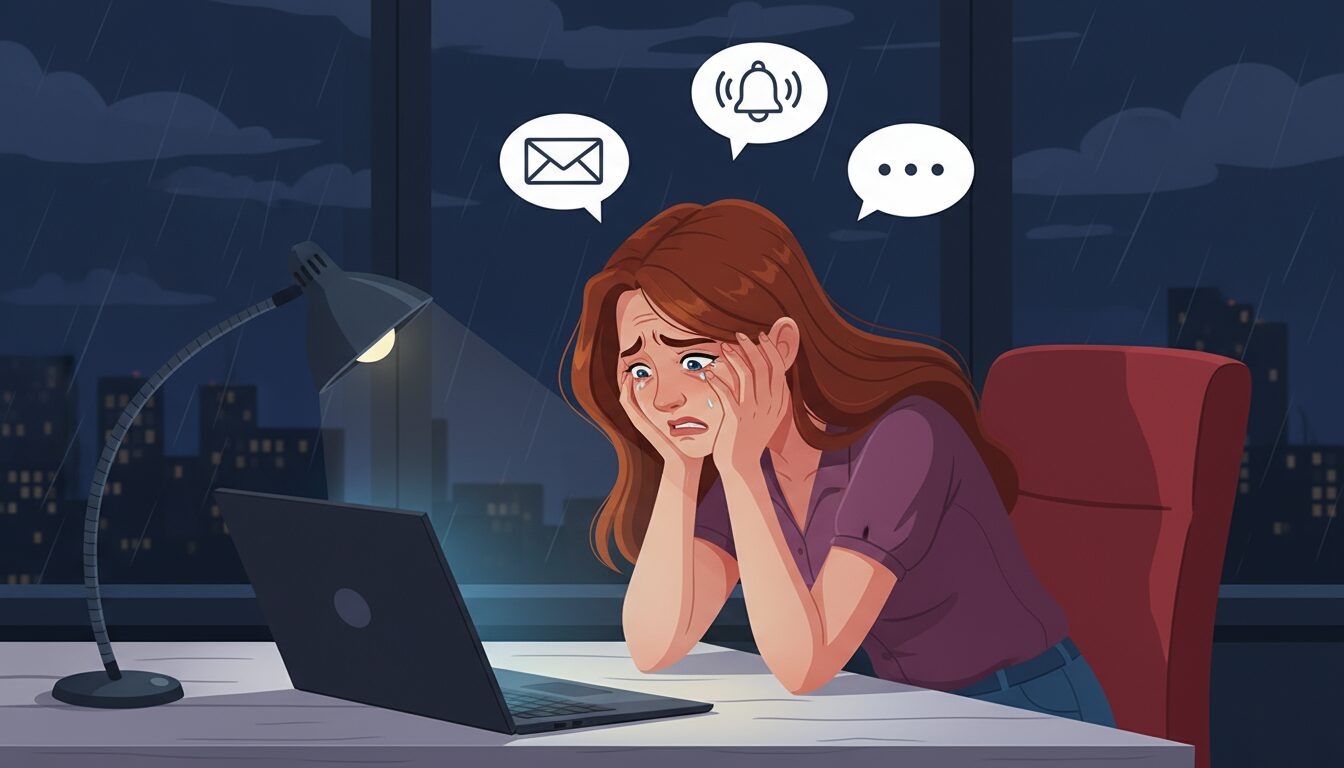
Working with social anxiety is like having your mind split between two separate tasks at once. One part of you is trying to do the job — complete the task, meet the deadline, deliver what’s expected. The other part is scanning the environment constantly, monitoring for the possibility of social interaction, preparing for the moment someone might turn to you, ask you something, evaluate you, or catch you off guard.
That split drains your cognitive load in a way that’s hard to explain to someone who hasn’t experienced it. You’re not giving the job your full attention. You’re giving it whatever’s left after the social monitoring has taken its share. Which, on a difficult day, isn’t much.

I remember this feeling clearly. Whenever I was at work, I’d always try to focus on what was in front of me, but half of my attention was always somewhere else. For me, the task at my job became almost secondary. And the cruel part is that the more demanding the social environment, the less of your cognitive bandwidth is available for the actual work. You end up performing well below your real ability.
This is what makes certain jobs so much harder than others for someone with social anxiety. It isn’t just that they involve more social interaction. It’s that they demand constant social readiness — a permanent state of alertness that leaves almost nothing in reserve for the work itself.
The 7 Worst Jobs for People with Social Anxiety
Most of the jobs on this list share a few common qualities that make them particularly hard for someone with social anxiety: constant interaction with strangers, unpredictable social dynamics, performance under observation, and environments where the social monitoring system never gets a break. The more of these qualities a role combines, the more cognitive bandwidth it consumes — and the harder it becomes to function at your actual level.
Here are the seven roles that tend to be the most difficult for people with social anxiety, and why.
1. Customer Service Representative
Customer service roles put you in a near-constant state of social readiness — and unlike most social interactions, you have no control over who you’re dealing with or what they’re bringing to the conversation. Upset customers, unreasonable complaints, and the expectation to remain calm and professional regardless of how the other person is behaving creates a specific kind of sustained pressure that is extremely hard to maintain when your nervous system is already primed for threat.
What makes customer service particularly draining for someone with social anxiety is the sheer volume of interactions. It isn’t one difficult conversation you can recover from. It’s dozens, back to back, with no meaningful break between them. By midday, the cognitive split between trying to do the job and trying to manage the social monitoring is running at full capacity — and there are still hours left in the shift.
2. Salesperson or Retail Associate
I did sales once. It was one of the hardest professional experiences of my life.
The role required me to approach strangers as they walked into the store and ask them directly if they wanted to buy something. For someone with social anxiety, the idea of approaching one stranger and initiating that conversation is already a significant ask. But it wasn’t one stranger. It was person after person, all day, with no natural break in the cycle and no option to skip an interaction because you were still recovering from the last one.
The part that made it genuinely unbearable wasn’t just the volume of interactions. It was that my income was completely tied to how many sales I made. Every rejection I received wasn’t just uncomfortable — it had real financial consequences.
So, if you’re considering a sales role and you have social anxiety, go in with your eyes fully open. It isn’t impossible, but the structure of most sales environments is almost perfectly designed to activate and sustain the anxiety loop all day long.
3. Waiter or Barista
Service roles in food and drink environments combine almost every quality that makes work hard for someone with social anxiety: constant interaction with strangers, a fast-paced and unpredictable environment, sensory overload from noise and activity, and the expectation to be warm, responsive, and emotionally available regardless of how you’re actually feeling.
The specific challenge of waitstaff and barista roles is that the social interaction is inescapable and immediate. There’s no buffer, no time to prepare, no moment to collect yourself between customers. You’re expected to read people quickly, respond naturally, and manage the emotional tone of each interaction — all while completing physical tasks under time pressure. For someone whose cognitive bandwidth is already being split between the job and the social monitoring, that combination is relentless.
4. Teacher or Public Speaker
Teaching is one of those roles where the social demand is total and continuous. You’re not just interacting with people — you’re performing for them, for hours at a time, while simultaneously managing the dynamics of a room, reading individual reactions, and adjusting in real time to how the group is responding to you.
The specific quality that makes teaching so hard for someone with social anxiety is the sustained exposure. There’s nowhere to redirect the attention. For the entire duration of a class or presentation, the focus is on you — and for a brain that has learned to treat that kind of visibility as threatening, there’s no natural moment of relief. Every word, gesture, and pause feels like it’s being evaluated. And unlike a single high-stakes presentation, teaching involves that experience repeatedly, every day.
5. Receptionist or Front Desk Staff
Receptionists are the face of an organization — which means they’re also the first point of contact for everyone who walks through the door or calls in. The role requires constant small talk, immediate responsiveness, and the ability to manage conflict calmly and professionally, often without warning.
What makes front desk roles particularly difficult for someone with social anxiety is the complete lack of predictability. You never know who’s coming in next, what they need, or what emotional state they’re in. That uncertainty keeps the social monitoring system running at full capacity all day — and because the role is inherently visible, there’s no way to step back or create even brief moments of social relief.
6. Emergency or Healthcare Worker
Healthcare and emergency roles carry a specific kind of pressure that goes beyond ordinary social anxiety triggers: the stakes are real, the situations are unpredictable, and the emotional intensity is high. You’re dealing with people in crisis, managing complex interpersonal dynamics under time pressure, and expected to remain calm and competent in conditions that would overwhelm most people.
For someone with social anxiety, the combination of high visibility, unpredictability, and genuine consequence is extremely difficult to sustain. The fear of making a mistake in front of others — which is already a core feature of social anxiety — becomes amplified when the mistakes actually matter. That amplification can make even routine interactions feel like high-stakes performances, which keeps the nervous system in a near-permanent state of alert.
7. High-Pressure Team Roles (Corporate, Leadership, or Client-Facing)
Leadership and client-facing roles demand a specific kind of social performance that hits almost every trigger social anxiety has. Public speaking, constant evaluation by supervisors and peers, networking, managing conflict, and being the visible face of decisions — all of these require you to be socially active in high-stakes contexts, repeatedly and without much recovery time between them.
What makes these roles particularly hard isn’t any single demand — it’s the accumulation of them. Each individual requirement might be manageable in isolation. But combined, they create an environment where the cognitive split between doing the work and managing the social monitoring is running at maximum capacity almost constantly.
If this list resonated with you and you want weekly insights on managing social anxiety — in work, in relationships, and in everyday life — join the newsletter here. It’s where I share the most honest and practical writing I do.
Moving Forward
Writing about my camp counselor experience in my remote jobs post made me realize something I hadn’t fully articulated before: the job you work in isn’t a neutral backdrop to your recovery process. It’s an active ingredient in it.
The jobs on this list aren’t bad jobs. Many people thrive in them. But for someone actively managing social anxiety, they tend to share a quality that makes recovery harder rather than easier — a relentless social demand that leaves you mentally depleted in ways that spill over into the rest of your life.
If you’re currently in one of these roles and feeling that social pressure, my post on the best remote jobs for people with social anxiety is worth reading. It isn’t about hiding from your job. It’s about finding conditions where you can actually build something meaningful, professionally and personally, without spending everything you have just getting through the day.
Your anxiety doesn’t have to be the thing that decides what you’re capable of. That’s worth remembering.
If this post resonated with you, I’d love to hear your experience in the comments below — which roles have been hardest for you, and what you’ve learned from them.
And for weekly writing on social anxiety and what recovery actually looks like, join the newsletter here.

Hi, I’m Blake Baretz, the creator of Social Anxiety Haven. I write about my personal journey with social anxiety and share research-backed strategies to help others navigate it. If you’d like more encouragement and resources, join my weekly newsletter.
Leave a Reply